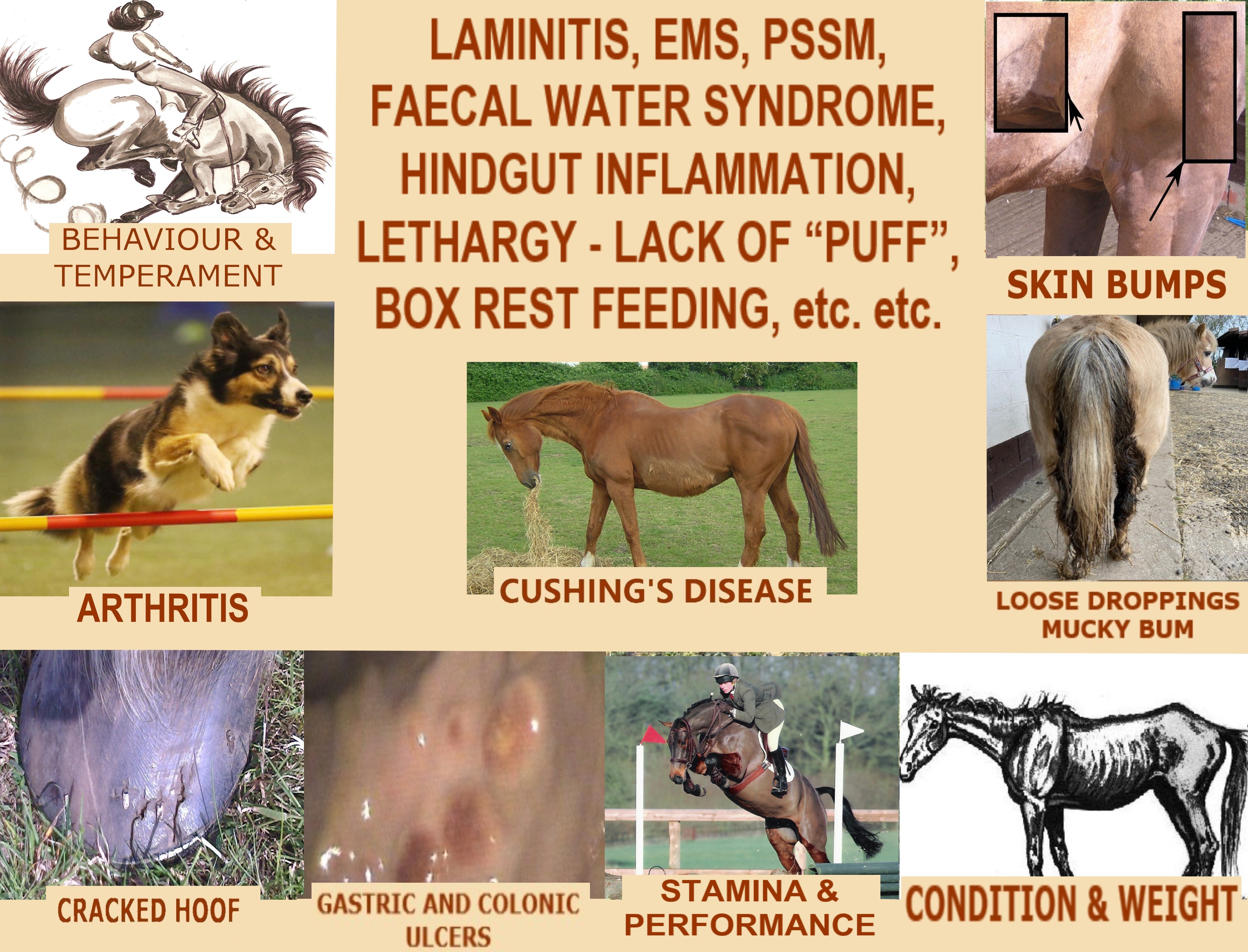
Principal Causes
● Excessive starch & sugar intake leading to Insulin Resistance
During food digestion starch is broken down to sugar, as glucose which, together with that in feed & forage passes into the bloodstream. This triggers an increase in the level of insulin which reverts to normal when the body has processed the glucose. High, prolonged intake of sugar & starch results in persistent excessive levels of insulin which can attack the membranes which hold the pedal (coffin) bone in place, allowing it to rotate & possibly penetrate the sole of the hoof, with potentially fatal consequences.
Laminitis caused by IR is particularly prevalent in the spring, as grass etc grows rapidly, producing lots of sugar on warm bright sunny days. Frosts can have the same effect, as can an excessive intake of starch & sugars in feed & forage.
● EMS – Equine Metabolic Syndrome due to obesity, especially in ponies, causes imbalances in blood sugar/fat/insulin ratios, which results in insulin resistance.
● Cushing’s Disease – a malfunction of the pituitary gland, leading to excess production of cortisol, which is a natural steroid, causing insulin resistance, as above.. This is a typical problem of the older horse or pony.
●Winter Laminitis
Insulating the lower limbs & hooves with suitable wrappings or leg protectors to maintain blood circulation can help plus the usual dietary considerations – feeding meadow rather than ryegrass haylage or hay, & soaking it. Choosing feeds with the lowest possible starch & sugar content is essential for example unmolassed plain oat chaff + mineral/vitamin supplement or balancer (be careful – the latter may contain some starch & sugar). Live yeast will help maintain a healthy hind-gut microbial population, further reducing the risk of laminitis (& loose droppings).
Molasses-free blends based on alfalfa & oat straw could be used, with a little soaked low-sugar beet pulp for palatability. If poor condition is a problem, add some cooked linseed meal. Starch + sugar content is about 7.5%; copra’s is 11% & full fat soya’s is 18%. In cold weather adding a cupful or 2 of vegetable oil to the daily diet can help prevent weight loss.
Other Causes
● Undigested sugars and starches passing into the hind-gut of the horse are broken down to products such as lactic acid. The increased acidity allows harmful microbes to proliferate, creating toxins which can attack the membranes in the hooves.
● Percussion – the effect of riding/jumping on hard ground.
● Use of steroids – thought to make the gut wall more permeable to the toxins which trigger laminitis.
●Infection – e.g. post-parturition.
● Antibiotics can upset the balance of the hind-gut microflora.
● Stress.
● Sensitivity or allergic reaction; the author knows of a horse, and an owner, who are both sensitive to rapeseed oil. The horse developed severe laminitis. The person developed blotchy skin, which eventually returned to normal after stopping taking a supplement containing the oil. This particular problem is fortunately rare. Some other feed ingredients can also cause similar problems, in particular, skin irritation.
Control & Prevention
●Susceptible horses & ponies should be on restricted grazing, preferably at night when the grass is not making sugar.
●Hay should be soaked long enough to remove as much sugar as possible.
●Overweight horse need to be slimmed down by restricting grazing, & feed & forage intake. However fibre should be at least 1.5% of normal bodyweight; roughage such as oat straw can be used as a partial hay substitute. A mineral & vitamin supplement or balancer (with low starch & sugar) will be required to rectify deficiencies in forage.
●Feed should be high in digestible fibre, with as little starch & sugar as possible. Choosing feeds with the lowest possible starch & sugar content is essential for example unmolassed plain oat chaff + mineral/vitamin supplement or balancer (be careful – the latter may contain some starch & sugar). Live & Brewers’ yeast will help maintain a healthy hind-gut microbial population, further reducing the risk of laminitis (& loose droppings).
Molasses-free blends based on alfalfa & oat straw could be used, with a little soaked low-sugar beet pulp for palatability. If poor condition is a problem, add some cooked linseed meal. Starch + sugar content is about 7.5%; copra’s is 11% & full fat soya’s is 18%. In cold weather adding a cupful or 2 of vegetable oil to the daily diet can help prevent weight loss.
Click here for suitable products.
●Cushinoid horses & ponies will require treatment. Some will respond to Agnus Castus, from which Vitex is prepared, or drugs such as Pergolide or Prascend, for which a prescription is necessary.
There is a wide range of feeds, supplements & balancers on the market, including those supplied by the author’s former business: Gravenhorse Feeds
Copyright Horseheath Nutrition. All rights reserved.
If any images have been inadvertently used without the copyright holders’ permission (e.g. supplied by customers) then that copyright is hereby acknowledged; copyright holders should contact Gravenhorse Feeds at the earliest opportunity so that appropriate arrangements can be made.
 HorseheathIndependent Equine Nutrition Consultancy